

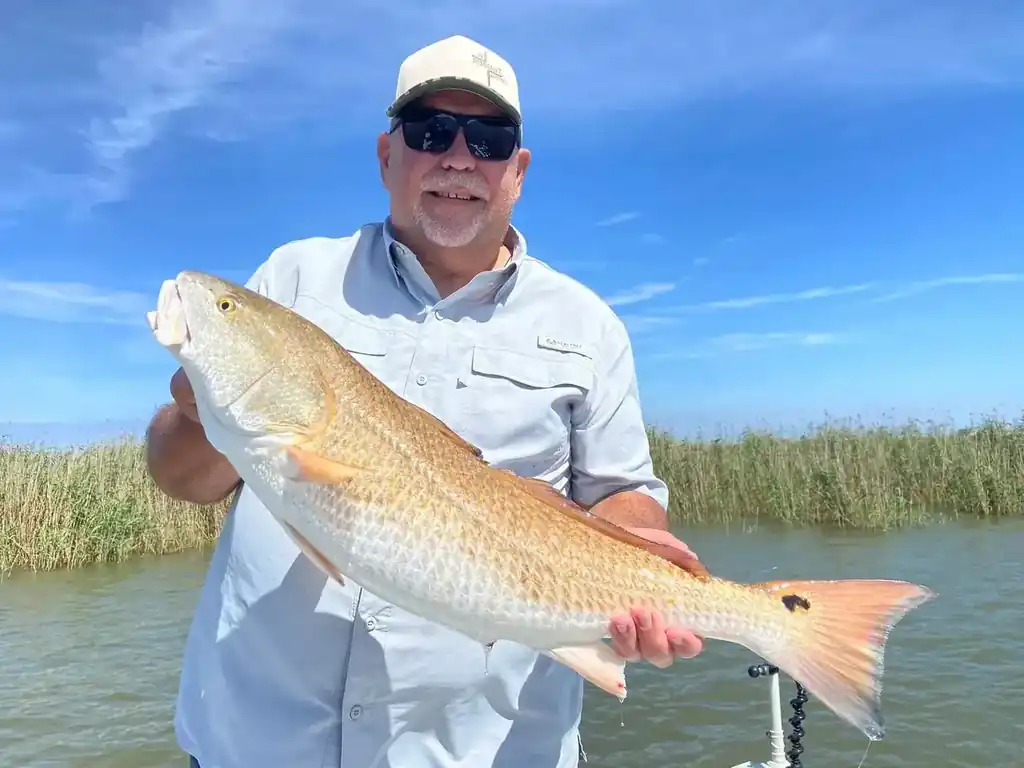
Redfish Charters in Venice, Louisiana
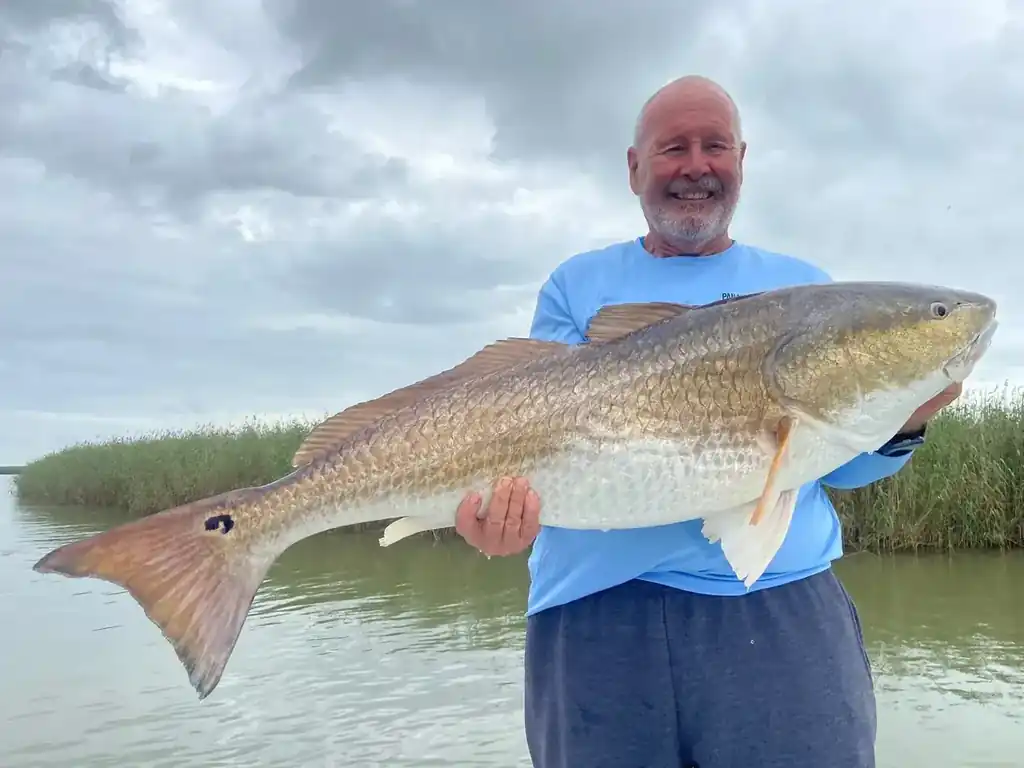
Redfish at a glance
- Science Name
- Sciaenops ocellatus
- Family
- Drum (Sciaenidae), the same family as speckled trout and black drum
- Other Names
- Red Drum, channel bass, bull red, rat red
- Environment
- inshore, coastal
- The mark
- One large black spot on the upper part of the tail base
- Life span
- Can exceed 40 years. The oldest aged in Louisiana was 39
- World Record
- 94 lbs. 2 oz, Avon, North Carolina, 1984
- Louisiana Record
- 61 pounds, June 1992
How to tell a redfish
The surest sign is the spot. A redfish carries a black spot at the base of its tail. Fish with several spots are common, and a redfish with no spot at all is extremely rare.
The body has a reddish-brown hue, which is where the name comes from. Individual fish run from a deep, blackish copper to nearly silver, with a white belly.
Redfish are drum, and the name fits. In spawning season the males make a drumming sound by vibrating special muscles against their inflated air bladder, and they gather in drumming groups to draw females in.
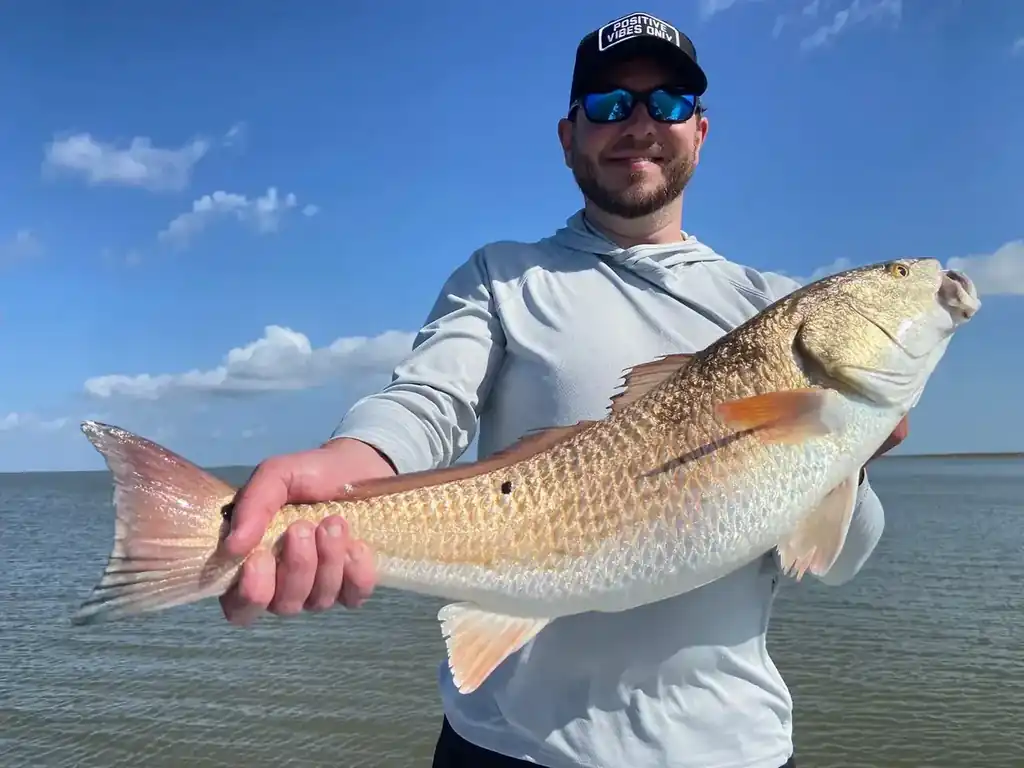
What is a bull redfish?
A bull red and a redfish are the same species. Bull red is what anglers call the big, mature fish, and rat red is the name for the small ones.
The difference is age and where the fish lives. Young redfish live inshore, in estuaries over grass beds and muddy and sandy bottoms. Once they mature, the adults usually live in open Gulf waters.
They grow fast and then level off. Louisiana Department of Wildlife and Fisheries biologists, who age fish by counting the rings in their ear bones, put the average redfish at about 11.5 inches at one year old, 19 inches at two, 24 at three, 27 at four and 29 at five. By ten years and older the average is 33 inches.
They also live a long time. The oldest redfish the department has aged was 39 years old, and the life span can exceed 40 years.
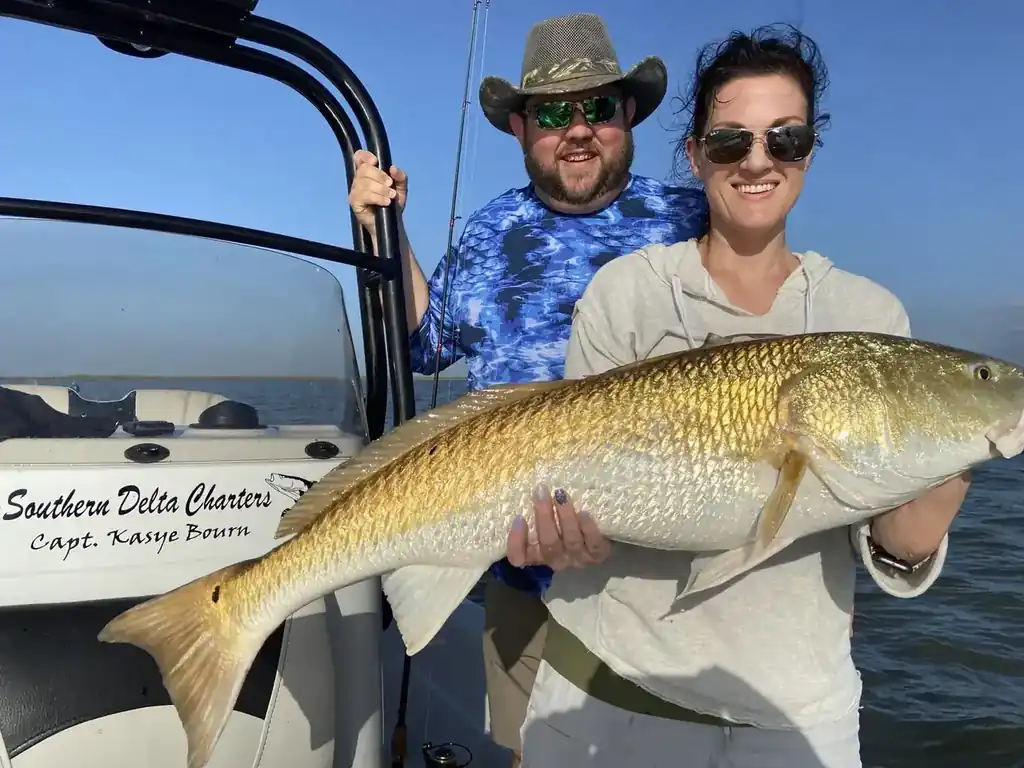
How fast redfish grow in Louisiana
Redfish grow quickly for their first few years, then level off once they mature and put their energy into spawning.
| Age | Average length | Usual range |
|---|---|---|
| 1 year | 11.5 in | 9 to 14 in |
| 2 years | 19 in | 15 to 23 in |
| 3 years | 24 in | 19 to 29 in |
| 4 years | 27 in | 22 to 33 in |
| 5 years | 29 in | 23 to 35 in |
| 6 years | 31 in | 25 to 37 in |
| 7 years | 31 in | 26 to 39 in |
| 8 years | 32 in | 26 to 39 in |
| 9 years | 32 in | 26 to 39 in |
| 10 and older | 33 in | 26 to 39 in |
Louisiana Department of Wildlife and Fisheries. Ages come from counting the yearly rings in each fish’s ear bones.
Where redfish live and what they eat
Redfish range from Massachusetts down the Atlantic coast and around the Gulf to central Mexico. They are an inshore schooling fish that lives in estuaries and along barrier islands, and they handle brackish water very well.
They are voracious predators. Redfish feed mainly on crustaceans such as blue crab and shrimp, and on small fish including menhaden, mullet, Atlantic croaker and flounder.
In shallow water they often feed head down in the grass with the tail waving in the air. Anglers call it tailing, and it is one of the best sights in inshore fishing.
Spawning usually runs from mid-August to mid-October, near passes where the water is saltiest. A female spawns about once every two to seven days in that stretch and produces an average of 1.5 million eggs in a season.
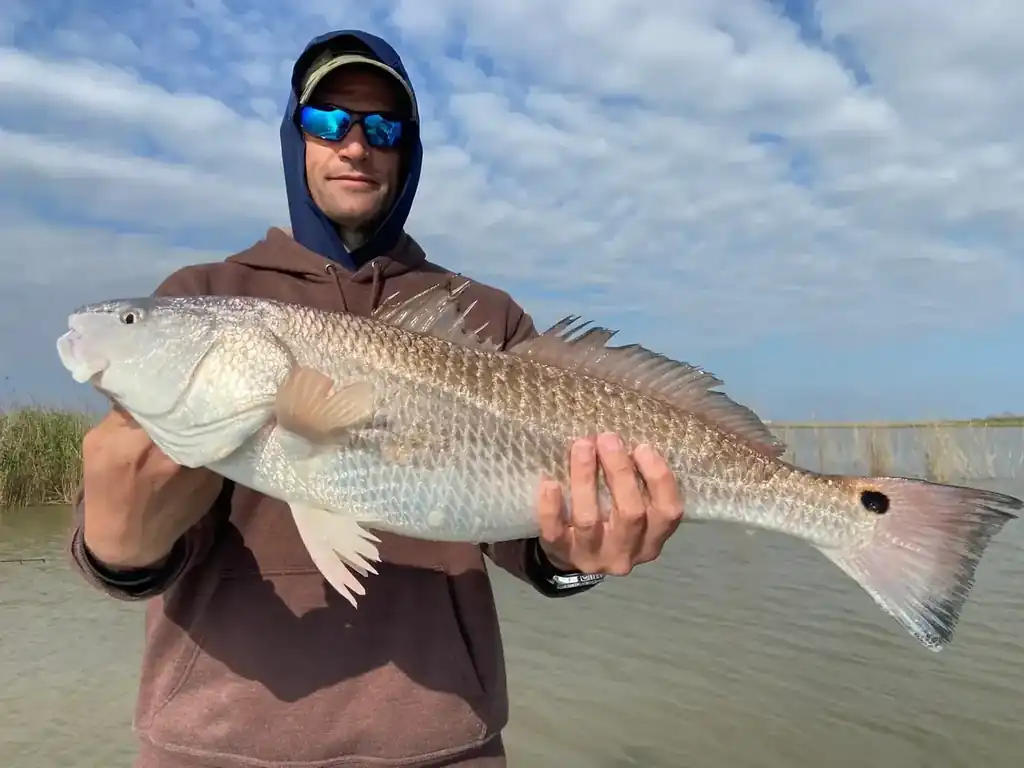
Record redfish
The all-tackle world record is 94 pounds, 2 ounces. David Deuel caught it from the surf at Avon, North Carolina, on November 7, 1984, and the record has stood ever since.
The Louisiana state record is 61 pounds, caught by David Weber in June 1992.
From the captain
Other Tips
Techniques: light tackle, surf fishing, fly tackle
Bait Strategies: Fresh Dead Crab, Hook and Sinker Live Shrimp, Freeline Shiner/Greenback
At the bay, there are white sand spots. Using a hogie with a neon tail, cast into the spots over and over until you get a hit. You'll be sure to load up in a matter of minutes!
In the grassie marsh look for shallow water pockets that go up into the grass. Cast a gold or silver spoon by the opening, if you see movement cast again in the same spot, it is likely that will get a red fish.
With a #2 hook and a small mullet, hooked in the back and the tail cut off, Reds will keep you busy all morning.
From the captain
Bull reds, slot reds and rat reds
The large reds over 27” in length are called bull reds, the short reds under 18” in length are called rat reds and those that are 18”-27” are considered keepers or slot reds these are the only ones you can keep.
We fish the marsh and the delta.
Captain Kasye Bourn
We are booking now!
Call & Reserve Your Dates Today!
Call or text for current rates and open dates.